Yi Maraba (You Are Welcome)
Red Clay
Tamale Ghana 2025
Red Clay | Tamale, Ghana | August 2025
Consider Community Concept: Our connection to the past is present everyday and connects us to the future.
I was welcomed in. Now I welcome you. You can welcome someone else. You are welcome.
Yi Maraba means "you are welcome" in Dagbani, a Gur language of northern Ghana. The phrase titles a song made with young artists in Tamale: welcome passed forward, person to person, generation to generation, day after day.
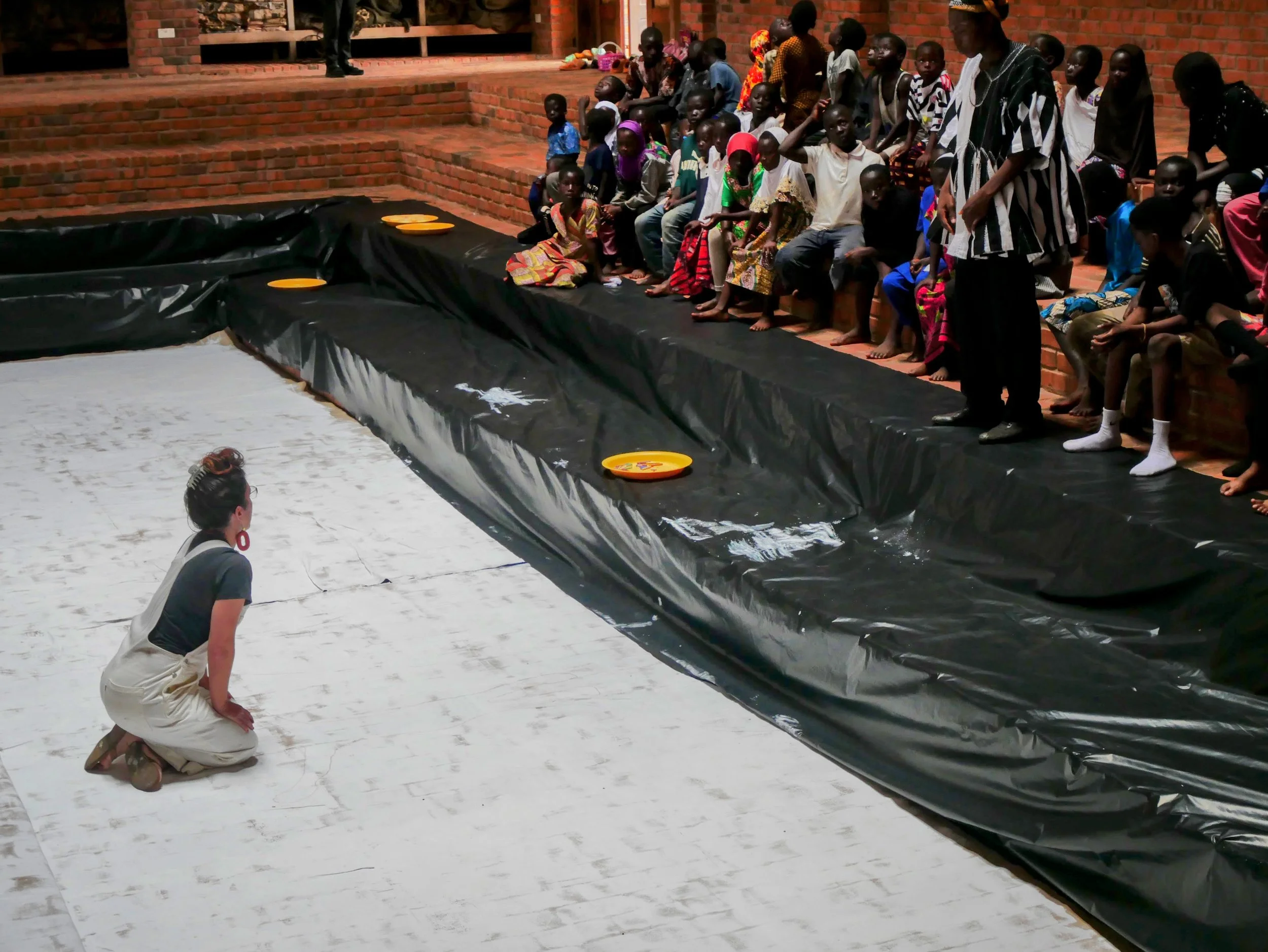
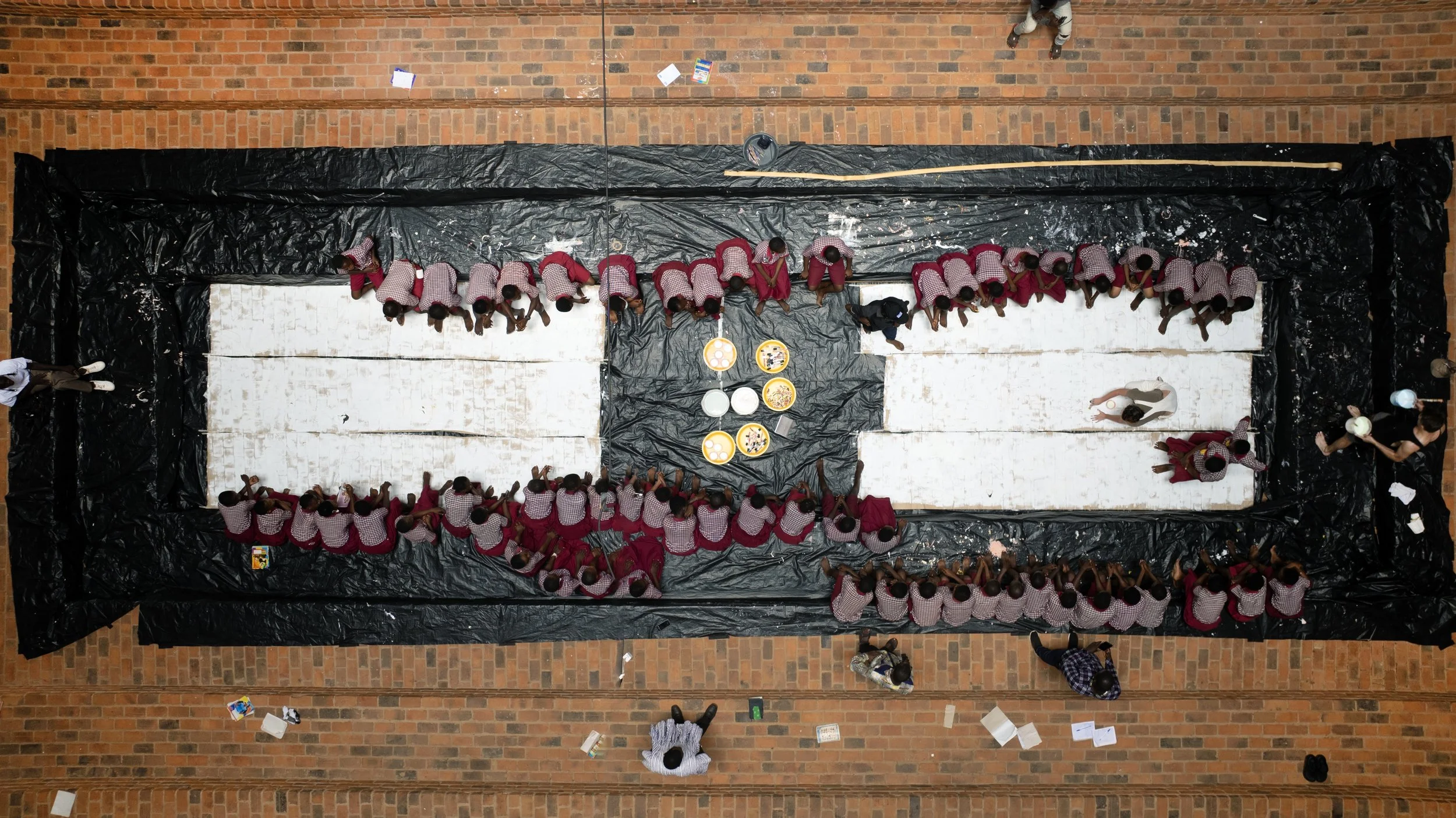
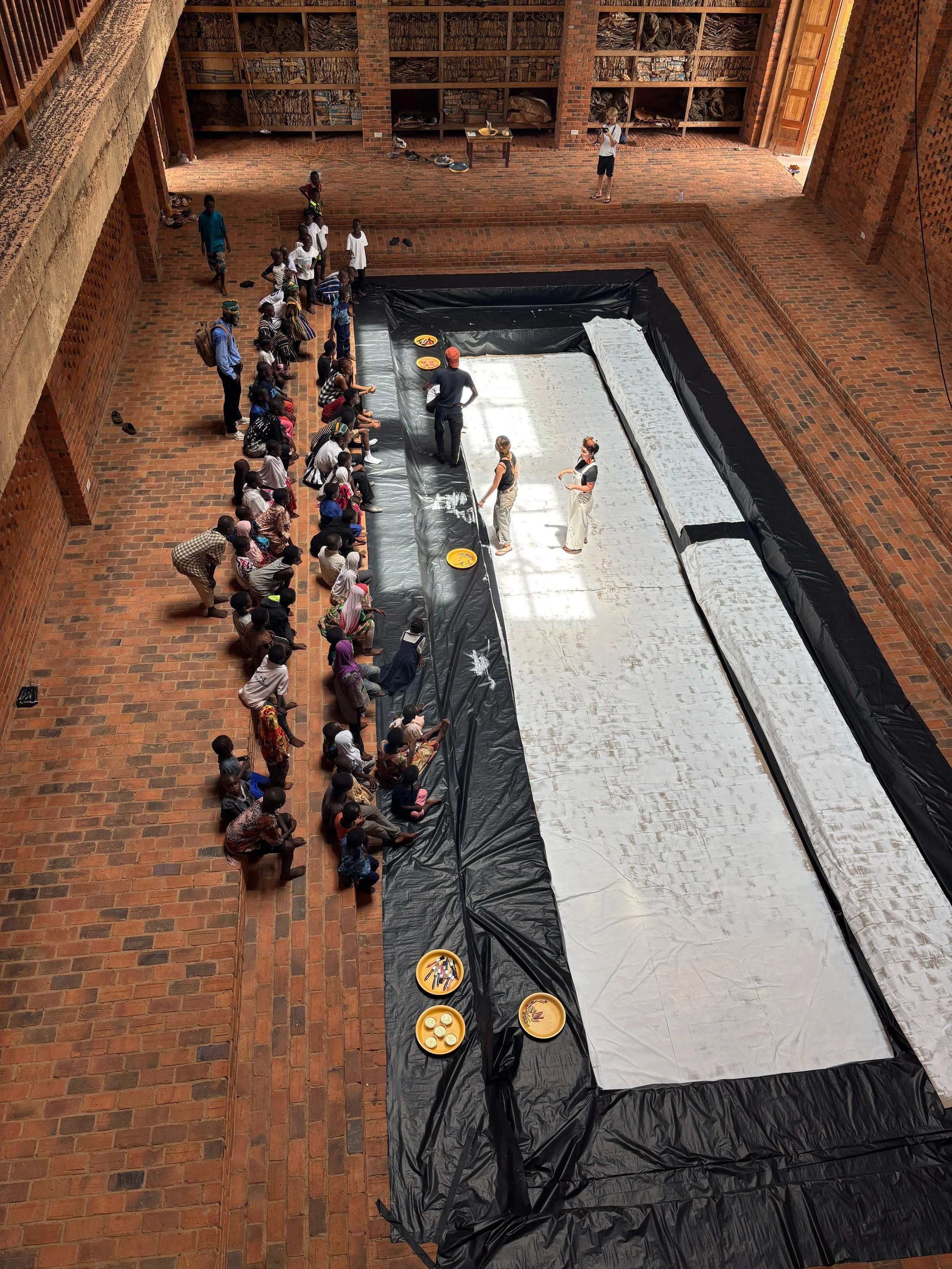
A team of four from The Painted Cloud - lead teaching artists Sarah Conarro and Julian Bozeman, with high school assistants Margot Steadman and Ramón Steadman - spent August of 2025 at Ibrahim Mahama's studio Red Clay in Tamale, a city in northern Ghana, invited as artists-in-residence for their larger project Past is Present and Connects Us to the Future. Red Clay is Mahama's 200-acre studio and a free, public art space, where decommissioned planes and colonial-era train carriages have been repurposed as classrooms, libraries, screening rooms, and exhibition spaces. The site also includes The Parliament of Ghosts, an open-air brick assembly space and one of Mahama's major installations. Within the installation, Sarah and Julian taught workshops to community members and school groups. Yi Maraba is a song created over the residency, paired with a Looping Musical Vignette (LMV) - a video where the song plays continuously over footage from across the residency.
When Sarah and Julian arrived in Tamale, the community taught them the daily Dagbani greetings - the morning greeting, the afternoon greeting, the asking after work, the asking after the family. They learned the greetings by being greeted, over and over, by the people they met. In the workshops, they incorporated the daily greetings as call-and-response with the young artists - a moment of reciprocal learning, as the community was still teaching the team these same greetings. Sarah and Julian shared this perspective with the young artists - that the young artists were teachers too, and the learning was an exchange. The young artists called and answered the way Sarah and Julian had been welcomed when they arrived. The call-and-response structured the song.
The phrases that make up the song came from local teachers who hosted their students for workshops, and community members who came through Red Clay across the residency. Zakariya Danaa, the father of a young artist named Hudu who was one of the lead singers on Yi Maraba, shared the proverb you can't pick up a stone with one finger, we need each other.
Dagbani is the language of the Dagomba people, spoken primarily in northern Ghana. The language is mostly spoken rather than written, with a written tradition still expanding alongside a much older oral tradition. Dagbani is structurally distinct from English. Translation depends on who is speaking, where, to whom, and for what purpose. The translation work for Yi Maraba happened as a group conversation across the residency. Dave Neindow served as primary translator, working with Khadija, Zakariya Danaa, Suley, Fadila, and others to find English and Dagbani that conveyed the same meaning.
Dagbani is also a tonal language: pitch helps determine the meaning of a word. The melody for Yi Maraba had to move with the language. The team brought drafts of melodies to the young artists, and they responded - what felt natural, what felt forced, what they wanted to change. The song changed each time. The final melody came from what was natural to the young artists' voices in their language.
The song has three sections - morning, afternoon, and evening. Each opens with the welcome chain and the daily greetings, then asks a noticing question. Morning: and do you notice how we begin? Afternoon: do you notice how the day is moving? Evening: do you notice how the day ends with dreaming? Three phrases run through: the things we do now change the future; you can't pick up a stone with one finger, we need each other; Time small small, every choice makes a difference. At the end, the welcome chain returns.
Young artists from Tamale recorded the song in Dagbani. The recording sessions happened in one of the decommissioned airplane classrooms at Red Clay. The metal walls of the airplane added natural reverb to the recording.
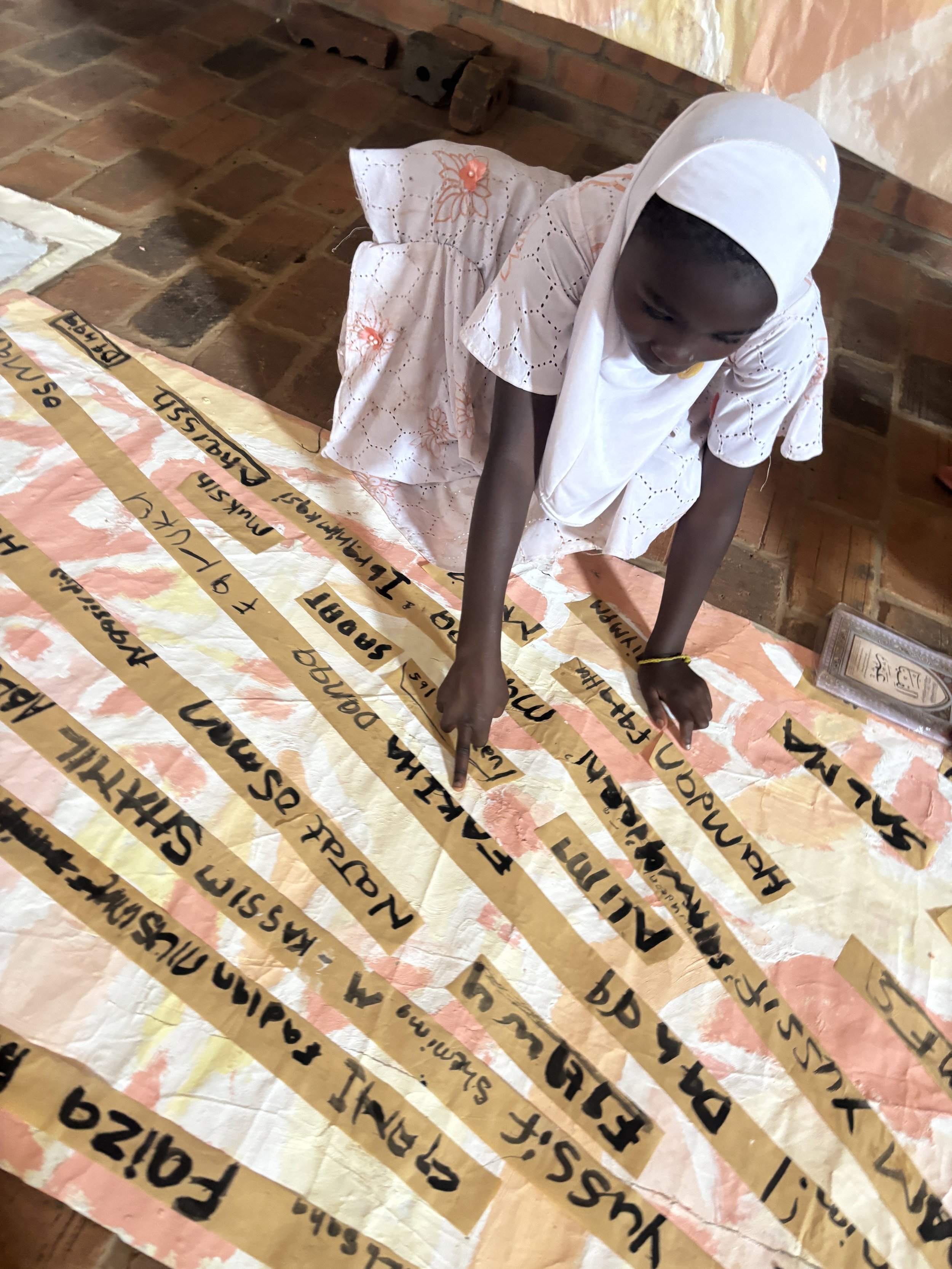
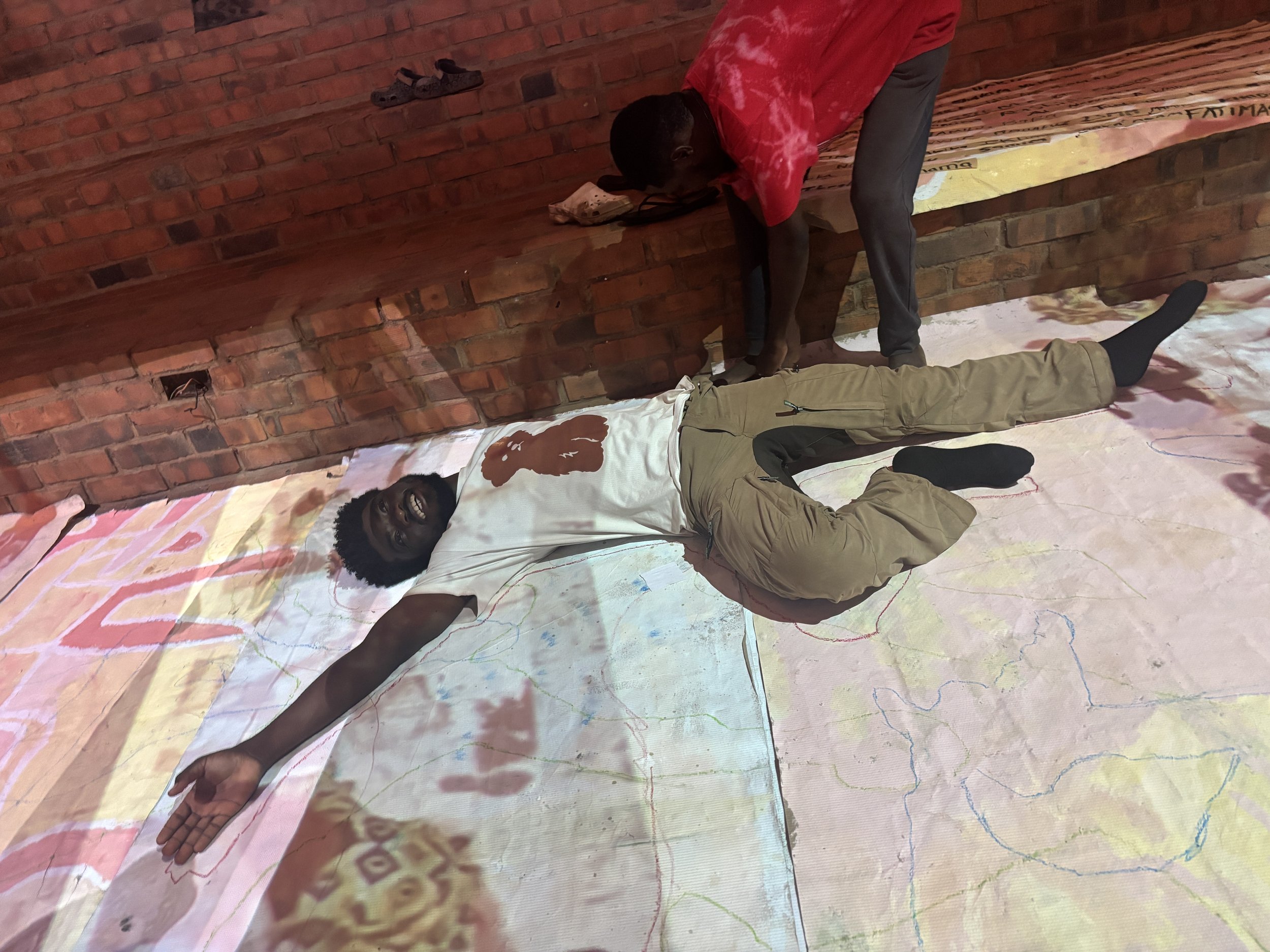
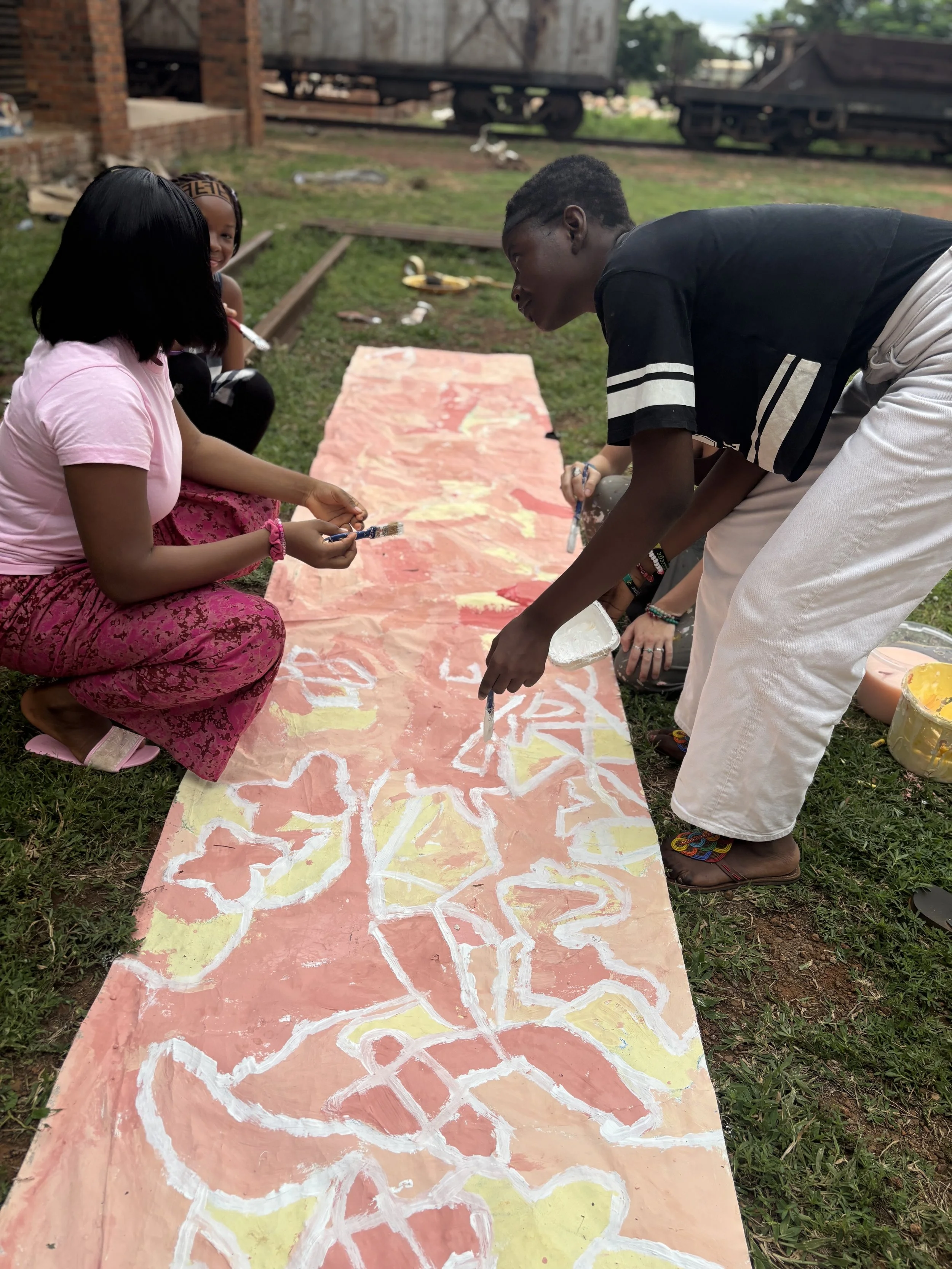
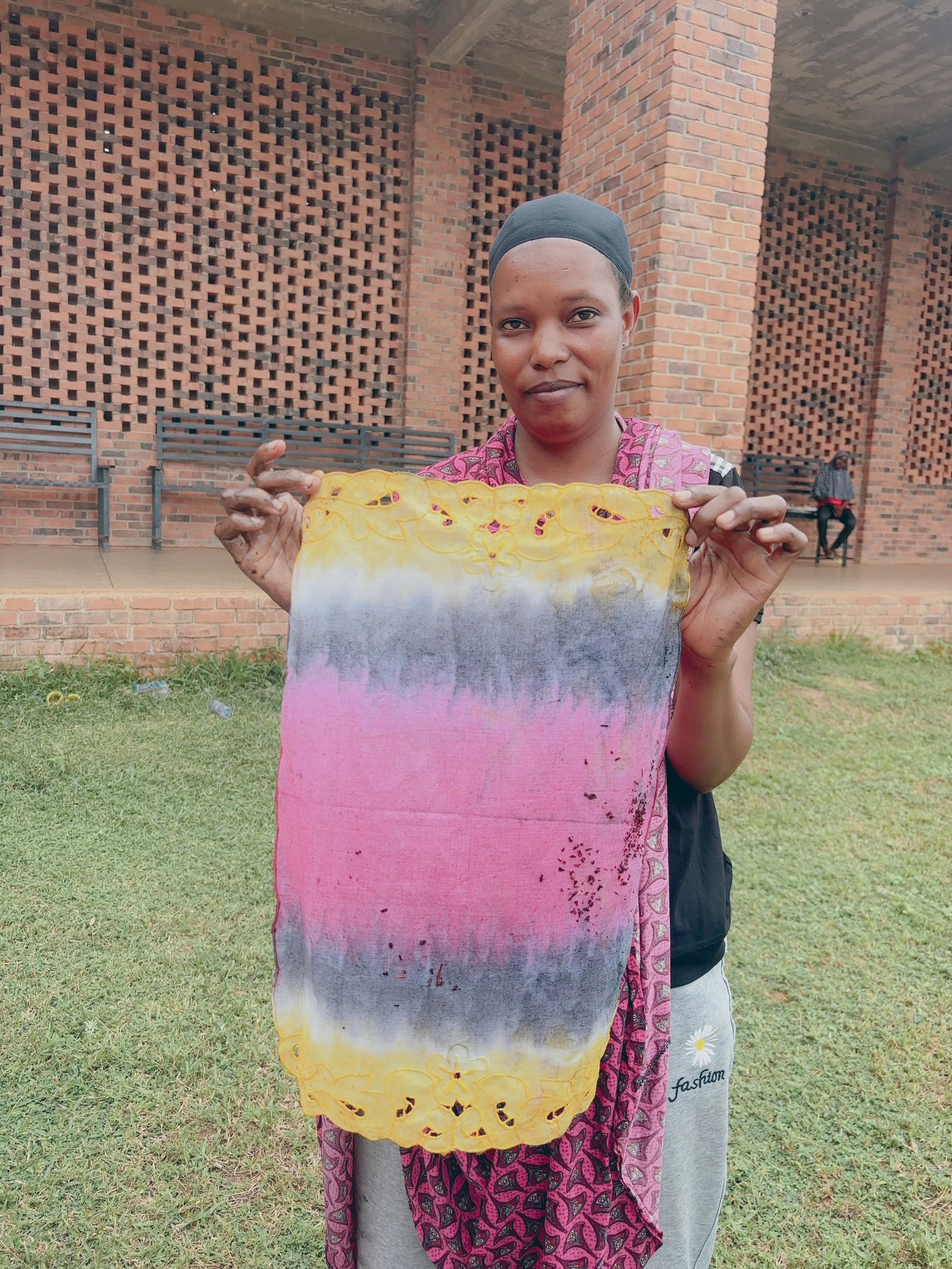
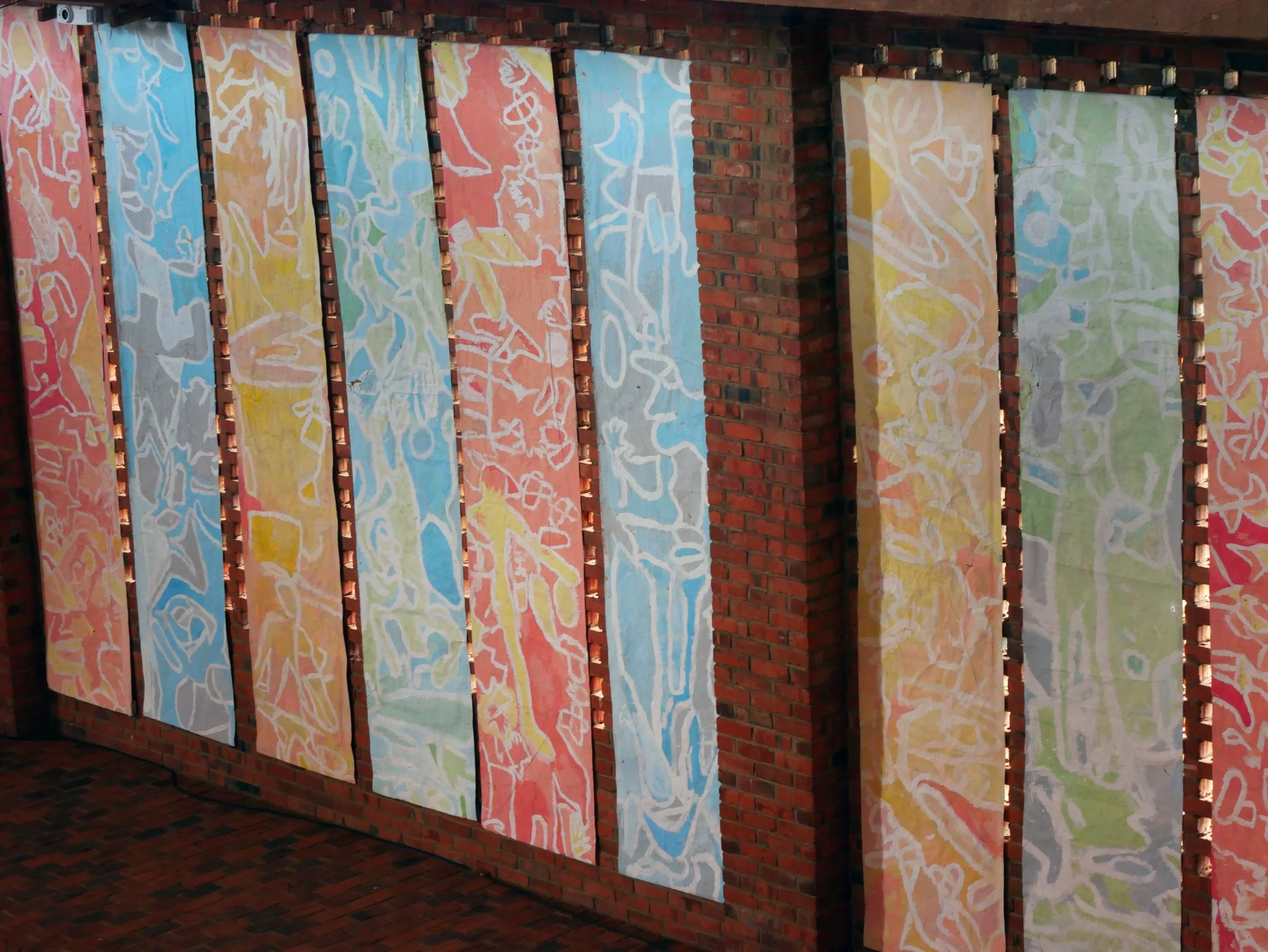
The footage shows fabric dyers at work, young artists painting collaboratively on the long surfaces, local break dance crew Giana and Breakers dancing in the projection space, the brick sculpture days where young artists moved and arranged bricks, the making of mobiles from found materials, the writing of names into the work, and the activated installation where young artists' real-time gestures were projected onto walls where previous work already hung. The beat loop in the LMV came from field recordings captured with young artists at Red Clay - sticks clanking on the airplane stairs, gravel kicked along the side of the train, wind blowing the leaves on the trees, and two bricks clapped together.
At the culminating event of the residency, Yi Maraba played through The Parliament of Ghosts alongside the paintings, the mobiles, the dance performances, and the projection work.
Made in collaboration with Red Clay in Tamale, Ghana, as part of Past is Present and Connects Us to the Future, a residency invited by Ibrahim Mahama.
Project team (Summer 2025): A team of four from The Painted Cloud: lead teaching artists Sarah Conarro and Julian Bozeman, with assistants Margot Steadman and Ramón Steadman. Dave Neindow worked alongside the team as assistant, translator, and teaching artist. Drums led by Ghanaian photographer and drummer Ernest Sackitey, with Ramón Steadman collaborating. The wisdom phrases in Yi Maraba were shared by teachers, community members, and family members who came through Red Clay across the residency.
The Painted Cloud is returning to Red Clay this summer 2026 with a team of six.